
Avondale Resident Lookup Sources
No official Avondale one-person search is a complete resident list. Each record was created for a different public task. The Maricopa County Assessor identifies a parcel owner, while a deed identifies people or entities in a recorded land transaction. Court records show a party's role in a case. Voter records have their own limits, and historic vital certificates can connect a person to parents or dates. Start with the record that answers the narrow question.
| Record | Fact it can confirm | Official source | Access route |
|---|---|---|---|
| Property roll | Owner, parcel, situs, tax mailing address | Maricopa County Assessor | Free current search |
| Recorded instrument | Named party, role, date, legal description | Maricopa County Recorder | Free index and unofficial image; paid official copy |
| Court case | Party role, case type, events, disposition | Arizona courts or the court clerk | Free basic index; some documents and copies cost extra |
| Voter record | Registration and limited participation data | Arizona voter services or Recorder request | Restricted fields and uses |
| Vital history | Birth, death, marriage, or divorce facts | ADHS or Maricopa Superior Court Clerk | Historic search or eligible copy request |
| Entity or license | Filed business role or professional credential | ACC or the relevant state board | Free public lookup |
A known address points first to the Maricopa County Assessor property search. A known case number belongs with the court. A historic family question may need the genealogy collections. Keep the date and the role shown by every result. An owner mailing address, court filing address, or statutory-agent address is not by itself proof that the person lives there.
Note: Choose the record by the fact sought, then preserve its date, field label, and official custodian.
Verify an Avondale Resident Match
Common names are the main trap in an Avondale one-person match. Preserve the exact spelling, then test initials, suffixes, prior surnames, and compound surnames. Dates and record geography matter more than a loose name match. Two records should not be merged when a parcel description, age, spouse, entity, or case date points to a different person. Even a matching surname and ZIP is weak evidence.
- Anchor the name to a dated official record. If an address is known, record the assessor's APN, owner, separate mailing address, and current deed number.
- Open the deed by number. Confirm the grantee, grantor, recording date, and legal description before treating the named person as connected to that parcel.
- Search the court index with the exact name and useful variants. Compare the court, case dates, party role, and case number rather than relying on the name alone.
- Use a second independent source, such as a current license, entity filing, eligible voter verification, or historic vital index. If sources conflict, stop and ask the custodian for the identified record.
- Docket
- The dated list of filings and events in a court case.
- Index and image
- An index describes a record. An image reproduces the filed document, which may contain more detail or require payment.
- Certified copy
- A custodian-issued copy formally attested as a true copy of its record.
Record each source's date beside the conclusion. The assessor is a current roll, a deed is a past transaction, and a court portal can lag the official file.
Check Avondale Resident Court Records
The free Arizona Public Access Case Lookup publishes basic information from 177 of 184 courts and updates weekly. Its first screen uses a generated verification word. The index excludes sealed matters, probate cases, orders of protection, mental-health files, victim or witness data, juvenile matters, and local ordinance charges. A missing probate hit does not show that no estate file exists. Contact the Maricopa clerk for probate.
Arizona eAccess supplies a separate document channel for covered Superior Court civil and criminal files from July 1, 2010 forward. Basic Case & Party Search accepts a full or partial case number or party name, with an optional court choice. Advanced Search adds AND, OR, and NOT logic. Registration is required, and documents or electronic certification can cost extra.
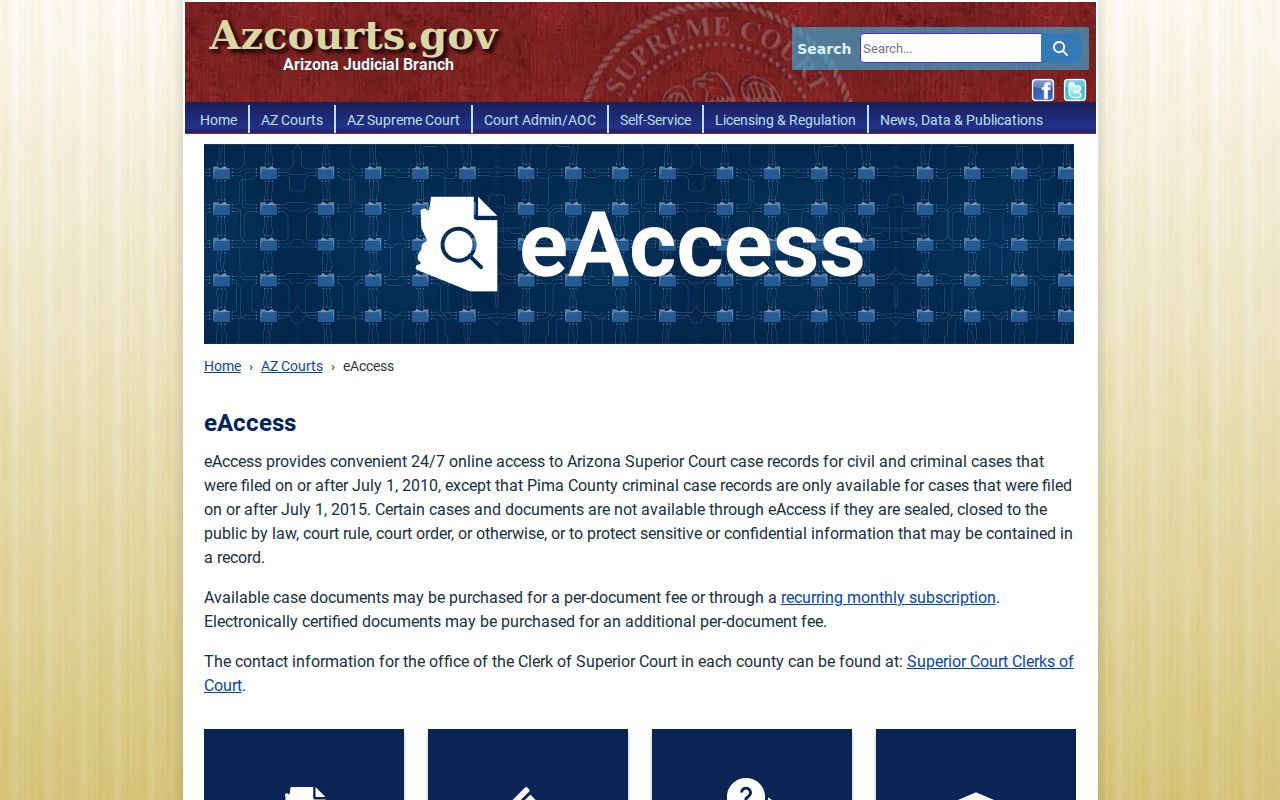
The captured eAccess page helps distinguish a document request from the free statewide case summary. Results normally identify the court, case number and title, filing date and type, parties and roles, charges or disposition, and docket events. Arizona's FY2024 report counted 66,205 documents obtained through eAccess, 27 percent more than the prior year. The court of record remains the correction and verification source.
Note: Public Access is not the official court record, and its probate exclusion makes the Maricopa clerk fallback essential for heir research.
Request an Avondale Name Search
Avondale City Court handles local civil traffic, misdemeanors, protection matters, city-code cases, and parking. Its records use a written request, not a phone order. The form offers view-only access at the court, copies, certification, or audio. It asks for requester contact details, the case or name researched, a case number if known, the desired document, delivery details, and a signature.
Submit the Avondale City Court records request at 11325 W Civic Center Drive or by mail or fax to 623-333-0580. A name search costs $17 for up to three names or three cases per name. Copies are $0.50 per page, and certification costs $17 per case plus pages. The court states a 7 to 10 business-day period. General records over five years may be unavailable, with distinct limits for civil files, audio, and certain cases.
Superior Court, probate, marriage, and divorce files go to the Clerk of the Superior Court of Maricopa County. Requests can use the clerk's online channel, its Phoenix or regional counter, or 602-372-5375. This split keeps a one-person search tied to the office that holds the actual file.
Confirm Avondale Resident Life Events
Arizona vital records divide public history from restricted current certificates. Under A.R.S. §36-351, a registered birth becomes public after 75 years and a death after 50 years. The free ADHS genealogy search is the direct historic route. Current birth and death certificates come from ADHS or county vital registration only for eligible applicants under state law.
A current certified birth or death copy costs $20. The birth application requests the subject's names, date and place of birth, parent names, applicant relationship and contact details, purpose, number of copies, payment, and identity proof. A signed photo ID copy or notarized signature is required with proof of eligibility. Marriage licenses and divorce decrees are different. The Maricopa Superior Court Clerk issues marriage copies and keeps the divorce case file.
Historic alternatives include Arizona birth certificates and indexes from 1855 to 1940, deaths from 1870 to 1963, and county marriages from 1871 to 1964 through FamilySearch. Wildcards, date and place filters, and the original image can resolve a name variant that a plain search misses. The final notes should state whether the search found an index entry or the certificate itself.
Note: A public historic index does not remove the eligibility rules that apply to a current certified certificate.
Read Avondale Voter Records Carefully
The Arizona Voter Information Portal is designed for one person's registration services, not for browsing Avondale by street. A.R.S. §16-168 permits defined list fields such as full name, party preference, registration context, residence and mailing address, ZIP, a supplied phone number, birth year, and prior four years of election participation. Protected voter addresses are removed. Birth month and day, identification numbers, signatures, and email are not released through that statute.
Participation history means elections in which the voter took part. It never reveals ballot choices. A requester seeking an authorized county file uses the Maricopa Recorder public-record request channel, identifies the data and purpose, and certifies a use allowed by law. The office also accepts its form through the documented email, fax, and mail routes. Arizona bars unauthorized internet redistribution.
Note: The public portal does not provide a verified browse-by-street function, so it cannot serve as a general Avondale household list.
Find Specific Avondale Connections
Different questions need different records. An heir may appear in a probate petition, notice, or recorded instrument. Because statewide Public Access excludes probate, start with the Maricopa clerk and use FamilySearch's 1870 to 1930 probate images for older work. A former classmate may appear in five digitized Agua Fria “Wickiup” yearbooks from 1958, 1961, 1962, 1963, and 1967. Regional newspapers and directories can then supply dates and name variants.
A business principal can be checked through the Arizona Corporation Commission eCorp Entity Search. It accepts an entity name, statutory agent, principal, or entity ID and can show status, formation date, known place of business, agent, principals, and filing images. Those entries show filing relationships. They do not turn an office or service address into a home address.
Professional credentials are decentralized among Arizona's state boards. The relevant board may show a name, number, status, city, dates, and discipline within its legal display window. A birth-parent search is different again and must stay within the confidential court or adoption process. Restricted certificates are not an informal people-finding tool.
Separate Custody from Residency
A custody result can distinguish one same-named person, but it does not prove current Avondale residence. Arizona state custody belongs in the official Department of Corrections search, local custody begins with the Maricopa County Sheriff, and federal custody uses the Bureau of Prisons. Court records must verify the charge and disposition because locator data has a narrower administrative purpose.
The Federal Bureau of Prisons inmate locator accepts a BOP, DCDC, FBI, or INS number, or a name with optional race, age, and sex filters.
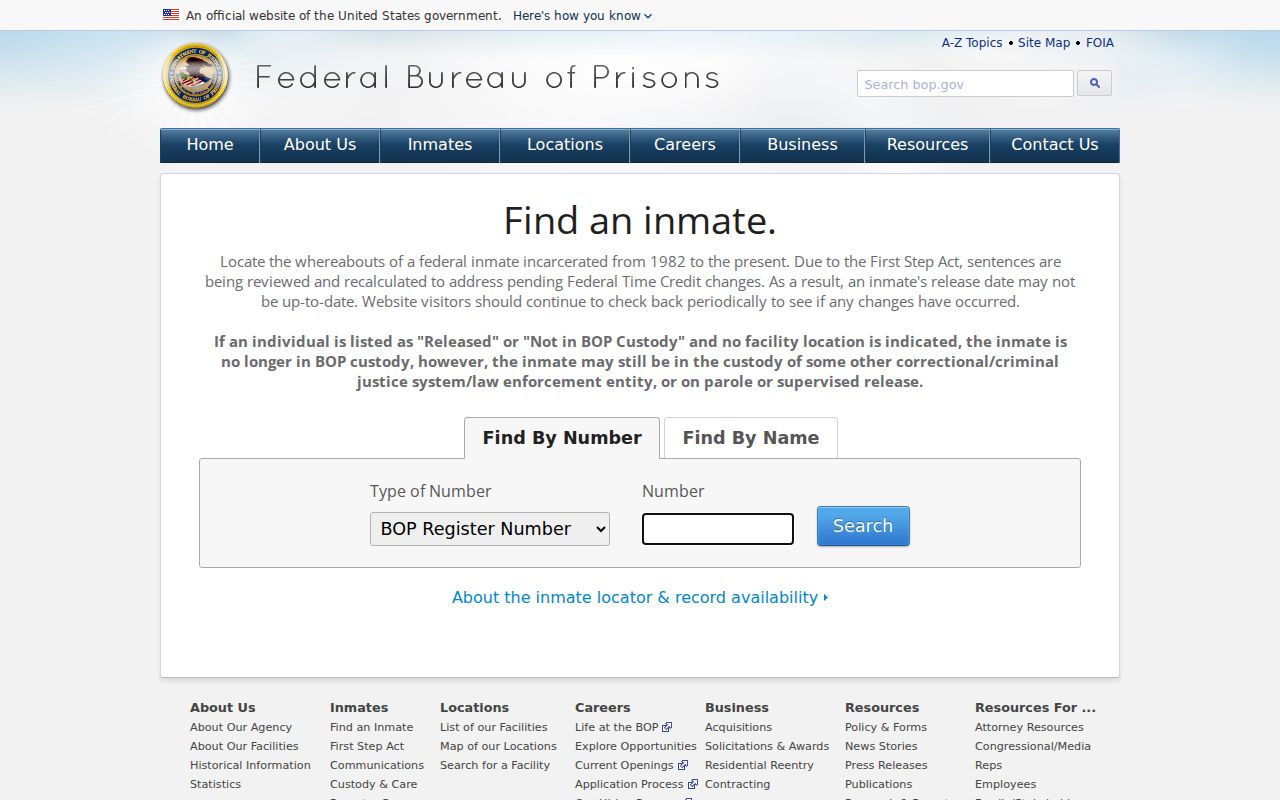
The federal screen is useful only when the question concerns federal custody. It should not be read as an Avondale residents roll, and a release date or status should be checked against the responsible agency and court record.
Avondale Records Request Fallbacks
When an online index fails, move to the custodian instead of treating silence as proof. Arizona Public Records Law, A.R.S. §§39-121 through 39-171, provides inspection and prompt production rules. A narrow request should name the record, person or case, date range, office, known number, and preferred format. Agencies need not create a custom biography or conduct an open-ended search.
Avondale municipal records use the City Clerk records channel, while court and police records have separate routes. Recorder instruments can be searched online, ordered as official copies, viewed at the Phoenix counter, discussed at 602-506-3535, or requested by form, email, fax, or mail. Maricopa court and probate material uses the clerk's online request, counter, or phone guidance. Historical dead ends move to the State Research Library, State Archives, Arizona Memory Project, or FamilySearch.
Phone calls work best for confirming process and retention. They are not a way to ask staff for a broad personal profile. Save the request, receipt, response date, and any stated reason for withholding a field.
Note: Ask for an existing identified record because Arizona agencies need not create a custom biography from several files.
Avondale Resident Lookup Limits
Some residents are intentionally absent from public views. The Arizona Address Confidentiality Program provides qualified survivors with a substitute address and mail forwarding. New Life Center in Avondale is an official enrollment assistant at 623-215-8072. Protected voter records use A.R.S. §16-153, while eligible property owners need the separate protection process under §11-483. Sealed, juvenile, protected, and mental-health court files also remain closed.
Private utility accounts, household lists, and motor-vehicle personal data are not open resident directories. Property records name owners, not renters or every household member. Commercial compilations can retain old addresses or merge two people with the same name. Correct a wrong assessor match with the assessor, a court match with the court clerk, and a license match with the board that maintains it.
Lawful use. An Avondale lookup is for lawful personal research. Arizona law does not permit stalking, repeated unwanted contact, surveillance, threats, harassment, or harm.
A sound result says exactly what the source proves. It also states what remains unknown. That restraint is the best safeguard against a false identification.